Peptide Testing: Hplc & Mass Spec Purity Overview Pinnacle
Just How To Read A Peptide Purity Examination: Hplc, Mass Spectrometry And Coa Analysis For Uk Scientists 2026
In theory, peptide pureness is measured by the chromatogram generated by reversed stage HPLC, and furthermore, we can get the number and relative quantity of feasible by-products by determining the peak location. A high-grade chromatogram has a solitary, symmetrical primary top with a level standard on either side. " Trailing"-- where the peak tracks off slowly on one side-- can suggest column issues, example overloading, or additional communications in between the peptide and the stationary stage. In this configuration, the stationary phase is hydrophobic (water-repelling), generally C18-bonded silica. The mobile stage is a gradient of water and a natural solvent like acetonitrile, frequently with a small amount of trifluoroacetic acid (TFA) to sharpen the heights.We support amino acid make-up analysis and web peptide web content evaluation for teams that need even more dependable focus setting and set interpretation. HPLC-tested means the example was gone through high-performance fluid chromatography to divide the target peptide from contaminations. The purity percent is usually computed from the main top location divided by the total integrated peak area.
Desalted peptides work well for ELISA coating, some cell-based assays, and applications where modest pureness serves. After synthesis and filtration, peptides are usually lyophilized (freeze-dried) as salts. The most typical counterion is trifluoroacetate (TFA) from the HPLC filtration solvents, though some peptides are provided as acetate or hydrochloride salts. These counterions aren't "contaminations" in the HPLC feeling-- they do not show up as different peaks-- but they do add to the total mass of the powder.- Tandem mass spectrometry (MS/MS or MS ²) pieces the peptide ions in the gas phase and evaluations the fragment masses.
- The peptide is gone through a basic filtration action (commonly gel filtration or a quick reversed-phase clean-up) to eliminate salts, small-molecule byproducts, and scavengers from the bosom action.
- A useful assay determining downstream signaling-- or a structural research study using NMR or X-ray crystallography-- demands the highest possible pureness available.
- " Trailing"-- where the peak routes off slowly on one side-- can show column troubles, example overloading, or secondary communications between the peptide and the fixed stage.
- For the majority of visitors of a peptide novices' overview, "research-grade" is the world you operate in.
Applications Of Our Specialist Peptide Testing Solutions
What Hplc Can Not Confirm Alone
BOC Sciences provides detailed peptide screening services to customers across sectors, making sure products fulfill stringent market demands and ensuring item consistency, security, and efficiency. It additionally sustains traceability-- each batch's lab recognition report can be tied to its COA and regulative filings, producing a clear proof. Basically, strenuous laboratory recognition is how you verify to regulators that your peptide fulfills all top quality requirements. It aids prevent conformity concerns such as fallen short audits or item recalls as a result of quality issues. This not only satisfies lawful requirements but eventually safeguards client safety.Peptide Pureness And Accuracy: How Labs Validate Composition
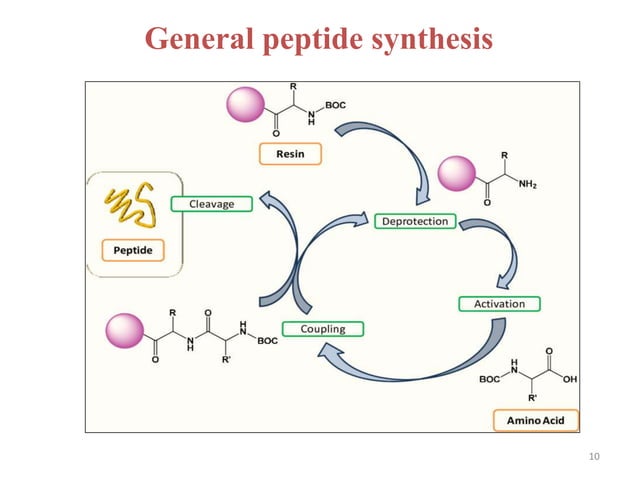
They are labeled "for research use only" to make clear that they are meant for in vitro experiments or pet research studies, not for any kind of form of human usage. Actually, a lab offering peptide screening must deliver data meeting the stringent logical assumptions of companies like FDA and EMA [4] By using a certified third-party lab, peptide producers or scientists ensure an unbiased and professionally documented analysis of top quality, which is specifically what examiners look for. Additionally, continuous independent screening supports compliance in set launch and quality Peptide Works peptide kits assurance. Research laboratory recognition for peptides indicates making use of clinical tests to confirm a peptide's identification, pureness, and make-up. In technique, this frequently includes third-party or independent testing by an external lab to verify that a peptide item really includes what the tag claims [2]During solid-phase synthesis, each amino acid coupling step has a yield of roughly 99-- 99.8%. When a combining fails, the expanding chain is topped to stop additional prolongation of the wrong series. The outcome is a peptide that's shorter than intended-- missing several amino acids.
We have the ability of offering clients from early peptide medication exploration stages to peptide evaluation. We supply all the technical information and instructions for every action of peptide synthesis and evaluation. The release procedure of peptide formulas is complicated, and an absence of scientific data hinders development. We develop in vitro release versions, supplying full release contours and kinetic model evaluation to maximize product design. Among the most typical resources of confusion in peptide jobs is using different top quality terms as if they imply the same thing. Peptide screening is the set of analytical checks utilized to examine a peptide sample prior to it is utilized in a research workflow. In useful COA testimonial, the term normally refers to purity screening, identity screening, and documents testimonial. Pureness screening asks just how much of the identified example is the major peptide versus related contaminations. Identification screening asks whether the measured mass or sequence-related proof matches the designated peptide. Paperwork testimonial asks whether the report is batch-specific, traceable, and outlined sufficient to be investigated. Peptide screening is the logical procedure used to validate that a research peptide is both pure and correctly determined.